 Japan
Japan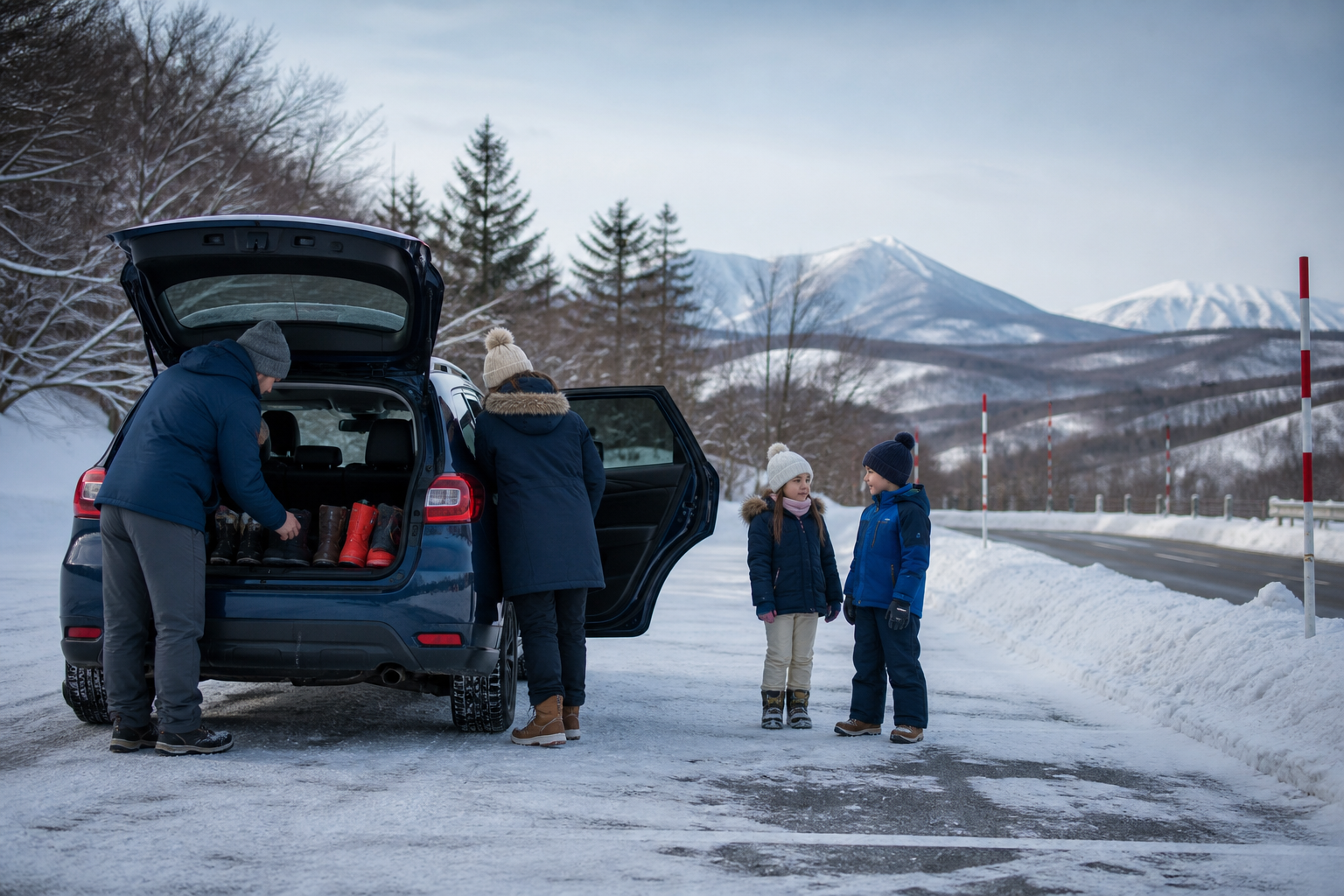
Winter driving in Hokkaido can unlock rural accommodation and scenery, but it is not a sensible place to learn snow and ice driving for the first time—especially with children in the car.
The safest decision may be to use rail, buses, or a private transfer. Treat this guide as a go/no-go checklist, not encouragement to rent.
Start with the no-rental test
Choose another transport plan if any of these apply:
- the driver has never driven on packed snow or ice;
- the route depends on driving through a forecast snowstorm;
- you would arrive after a long flight and drive immediately;
- the itinerary has long rural legs with no schedule buffer;
- you are not comfortable with left-side traffic, narrow roads, or Japanese road signs;
- the group cannot safely wait in cold conditions if the road closes.
Hokkaido’s official winter-road leaflet warns about slippery surfaces and low visibility. Read the current Hokkaido Government winter driving guidance before making the decision.
What winter equipment should you confirm?
The Hokkaido Government leaflet says winter rental cars are equipped with snow tires for winter-road use, but you should still confirm the equipment for your exact dates and branch. Ask about:
- winter tires and their condition;
- anti-lock braking system;
- four-wheel drive availability and whether it changes handling expectations;
- ice scraper and snow brush;
- emergency contact process;
- child-seat availability;
- roadside assistance limitations;
- what happens if roads close or the return branch becomes unreachable.
Four-wheel drive can help a vehicle move, but it does not shorten every braking distance or remove the risk of ice. Equipment is not a substitute for winter-driving experience.
Build a route that can fail safely
A family itinerary needs margin. Do not plan winter driving time from a summer map estimate alone.
Prefer:
- daylight driving;
- shorter legs;
- accommodation with flexible arrival;
- major roads before scenic shortcuts;
- a backup rail, bus, or transfer option;
- a day with no prepaid activity immediately after a long drive.
Check official road and weather information shortly before departure and again before each leg. NEXCO East publishes a seasonal Hokkaido driving guide, and local authorities may issue closures or warnings.
Children change the risk calculation
With children, a delay is not only inconvenient. Pack for the possibility that the vehicle stops moving for longer than planned.
Keep accessible inside the cabin:
- warm layers, gloves, and hats;
- water and age-appropriate snacks;
- medicines and basic care items;
- a charged phone and battery pack;
- offline booking details and route notes;
- a small towel and spare clothes;
- child-seat instructions.
Do not place loose heavy objects where they could move during sudden braking. Confirm that the child seat is appropriate before leaving the branch.
Driving habits to discuss before pickup
Japan drives on the left. Winter conditions add longer stopping distances, hidden ice, snowbanks that reduce visibility, and blowing snow. The Hokkaido Police publishes additional winter driving safety guidance.
A cautious plan includes:
- slower speeds appropriate to the surface;
- much more distance behind the vehicle ahead;
- gentle steering, braking, and acceleration;
- no rushed lane changes;
- stopping somewhere safe when visibility deteriorates;
- no reliance on driver-assistance systems to solve poor conditions.
If weather or confidence falls below your threshold, change the plan. A prepaid booking should not pressure a family into an unsafe drive.
Better alternatives for common routes
For Sapporo, Otaru, Hakodate, Asahikawa, or major ski areas, compare the full public-transport and transfer route before renting. Airport buses, hotel shuttles, trains, and booked transfers can remove parking and weather stress. Taxis may need advance planning in smaller towns.
The Hokkaido Official Tourism Site transport guide is a useful starting point for comparing options.
If you still decide to rent
Use the family car-rental checklist, then compare a winter-suitable vehicle only after confirming experience, route, equipment, child seats, protection terms, and a weather cancellation plan.
Use this only as one search step. Confirm winter equipment directly with the supplier before payment. Marketplace filters and example vehicle images are not enough.
The best winter itinerary is the one that remains safe when the weather refuses to follow the plan.