 Japan
Japan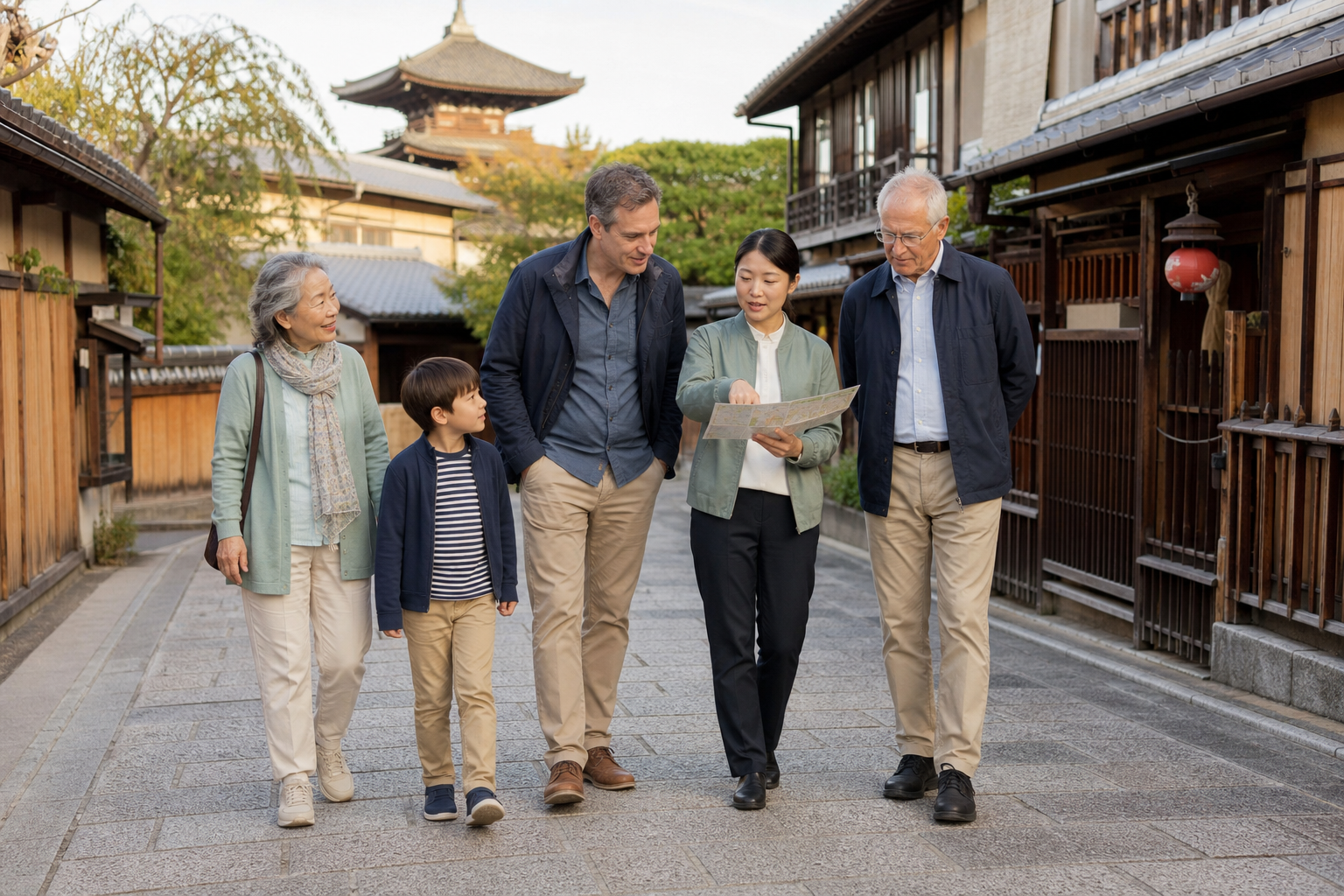
A private Kyoto tour can be worth paying for when the group needs a slower pace, fewer transfers, help prioritizing sights, or an itinerary that works for both children and older travelers. The value is not simply “having a guide.” It is removing the parts of the day most likely to become tiring or confusing.
This guide helps you compare tours without pretending that one itinerary works for every family.
When a private tour is a strong fit
Start with a private guide when several of these are true:
- the group includes young children and older adults;
- walking tolerance differs between travelers;
- you have only one day and want fewer navigation decisions;
- you need a guide who can adjust the pace;
- the group wants context, not only transport between photo stops;
- accessibility or restrooms must be considered in advance;
- a large amount of luggage would otherwise travel with you.
A private tour is less compelling if your family enjoys independent exploration, already has a simple neighborhood plan, or mainly needs a taxi between two places.
Guide, vehicle, and admission are separate questions
“Private tour” does not always mean “private vehicle.” A booking may include a guide who travels with you on foot and public transport, a driver without interpretation, or a vehicle plus a licensed guide.
Before paying, ask what the displayed price includes:
| Item | Question to ask |
|---|---|
| Guide | Is the guide private to our group, and which languages are offered? |
| Transport | Walking, public transport, taxi, or private vehicle? |
| Vehicle | Is it included, and are child seats available? |
| Tickets | Are admissions included or paid on the day? |
| Meals | Included, reserved, or completely separate? |
| Pickup | Hotel, Kyoto Station, or a fixed meeting point? |
| Overtime | What happens if the group needs a slower pace? |
Kyoto’s official travel guide lists ways to reserve city-certified interpreter guides. Start with the Kyoto Tourist Information Center guidance and official interpreter-guide information.
Describe your group before asking for an itinerary
A useful enquiry is specific. Tell the guide:
- number and ages of travelers;
- stroller use;
- walking tolerance and stair concerns;
- mobility aids;
- food restrictions;
- must-see places;
- places already visited;
- hotel or station start point;
- preferred finish time;
- whether the child needs a seat in any booked vehicle.
Avoid asking for “all the famous sights in one day.” Kyoto’s major sights are spread across the city, and rushing between them can erase the benefit of a private tour.
Build around two anchor areas
For a half-day, choose one main area and one optional nearby stop. For a full day, two anchor areas are usually more realistic than a checklist across every corner of the city.
A family-friendly structure might be:
- meet near the hotel or a simple station exit;
- visit the highest-priority sight before the busiest period;
- take a planned seated break;
- continue in one nearby district;
- finish somewhere with easy onward transport.
This is an editorial planning pattern, not a claim that every route is accessible. Kyoto City provides a Universal Sightseeing resource that can help with advance questions, but conditions vary by site.
Questions that reveal a good fit
Send these before booking:
- Have you guided groups with children and older travelers together?
- Can the route change on the day if someone becomes tired?
- How much walking and how many stairs should we expect?
- Where are reliable seated breaks and restrooms?
- Can you suggest a rain or heat alternative?
- Are transport and admission costs included?
- If a vehicle is used, can you confirm passenger capacity and child seats?
- What is the cancellation policy?
- Who do we contact if our train or flight is delayed?
- Is the final itinerary confirmed in writing?
The quality of the reply often tells you more than a generic star rating.
Marketplace or direct booking?
A marketplace can make price, language, availability, and cancellation terms easier to compare. Direct booking may give you a clearer conversation with the guide or local operator. Neither route is automatically better.
When comparing, make sure you are looking at the same duration, group size, inclusions, and transport type. Save the exact cancellation deadline in Japan time.
Use this as one comparison source and also check the official Kyoto guide resources above. Compare the actual itinerary, walking demands, inclusions, and cancellation terms before booking.
A simple go/no-go rule
Book a private tour when customization removes meaningful strain from the day. Skip it when the itinerary is already simple and the group is happy navigating independently. For mixed-age groups, the best tour is rarely the one with the most stops; it is the one everyone can finish comfortably.